
Construction Tech · Industry · Data
From spreadsheets to intelligence: the construction tech leap
Construction has always been instrumented — by people, on paper, in spreadsheets. The leap that matters now is from data that describes the past to a system that anticipates the next failure.
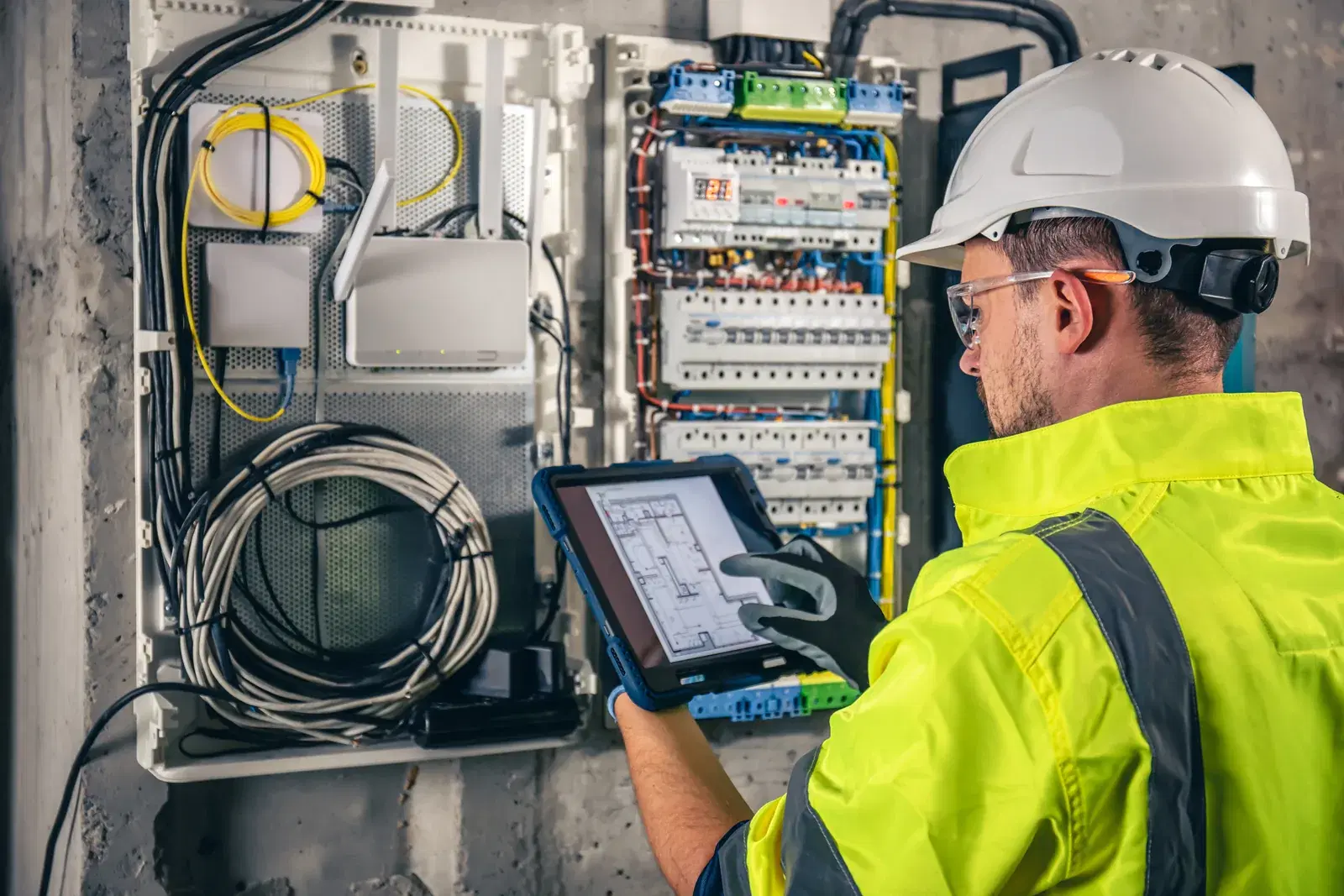
Walk into any project office in India and you will find the same artefact: a wall of trackers. Pour schedule, snag list, RFI log, materials inwards, manpower deployment. Every column is a number. Every number is the output of a person who walked the site, opened a spreadsheet, and typed.
This is not a failure of the industry. It is, in some ways, an extraordinary act of human instrumentation. Construction has been the single most data-rich physical industry on the planet for two decades — the data has just lived in static cells, owned by individuals, and gone stale within hours of being captured.
The leap that matters
The interesting question is not "how do we get more data?" The data is already there. The question is what changes when the system collecting the data is no longer human, and the data itself is no longer static.
Three things, concretely:
- The data is reconciled, not reported. A LiDAR scan does not "report" that floor 12 is structurally complete — it is the structural record of floor 12. There is no second-hand version, no possibility of a number drifting between the site and the office.
- The data is queryable across time. A scan history is a sequence you can rewind. A spreadsheet is a snapshot whose author may have left the project.
- The data is the input to a model. Not a BIM model — an inferential one. The system that knows what the slab looks like every two weeks can also predict what the cumulative drift will be at floor 25. A spreadsheet cannot.
Why the spreadsheet stack persisted so long
Spreadsheets won, in construction, for the same reason they won in finance: they are infinitely flexible, they are owned by the person operating them, and they ask nothing of the rest of the organisation. That last property is decisive. Any system that requires the site team to log in, file a status, mark a checkbox, has lost before it begins.
The graveyard of construction software is built from products that asked the foreman to type. The next generation succeeds by asking nothing of the foreman at all.
The shift from spreadsheets to intelligence is not, primarily, a shift in the analytical layer. It is a shift in the capture layer. Once the capture is autonomous — scanners on a tripod, drones overhead, computer vision on the cameras — the analytical layer can be anything you want it to be. Until then, it cannot be much.
What "intelligence" actually means
Intelligence, in this context, is not a chatbot. It is the ability to answer a project director's three hardest questions without anyone having to assemble the answer:
- What is happening on my site right now, geometrically and programmatically?
- What is going to happen in the next four weeks that I should be concerned about?
- If I had to defend a contractor decision in front of a board today, what is the time-stamped evidence?
Spreadsheets answer none of these. They answer adjacent questions, with a delay, with the assumption of trust. Intelligent systems, when they are honest, answer them directly.
The next decade
The next decade in construction will not be defined by a single product. It will be defined by the migration of the project record from a stack of trackers to a stack of physical artefacts — scans, models, deviation maps, predicted risks. The trackers will not vanish. They will become output of the model, not input to it.
The teams that get there first will run projects with a fraction of the PMC overhead. The ones that get there late will spend the same decade explaining variance after the fact.
That is the leap. It is not coming. It is here, on a handful of sites, already.
Written by
Arun Ambrayath Nair
Manager Planning and Coordination, Inkers

Construction is changing. Are you?
We work closely with every client to understand the specific project before anything else. Tell us what you’re building.