
Kaël · AI · Construction Intelligence
Inside Kaël: how the AI project manager surfaces site risks
Kaël is a working system built around how construction actually runs. Here is how it operates under the hood — from scan ingestion to the daily risk feed that lands on a project director's desk.
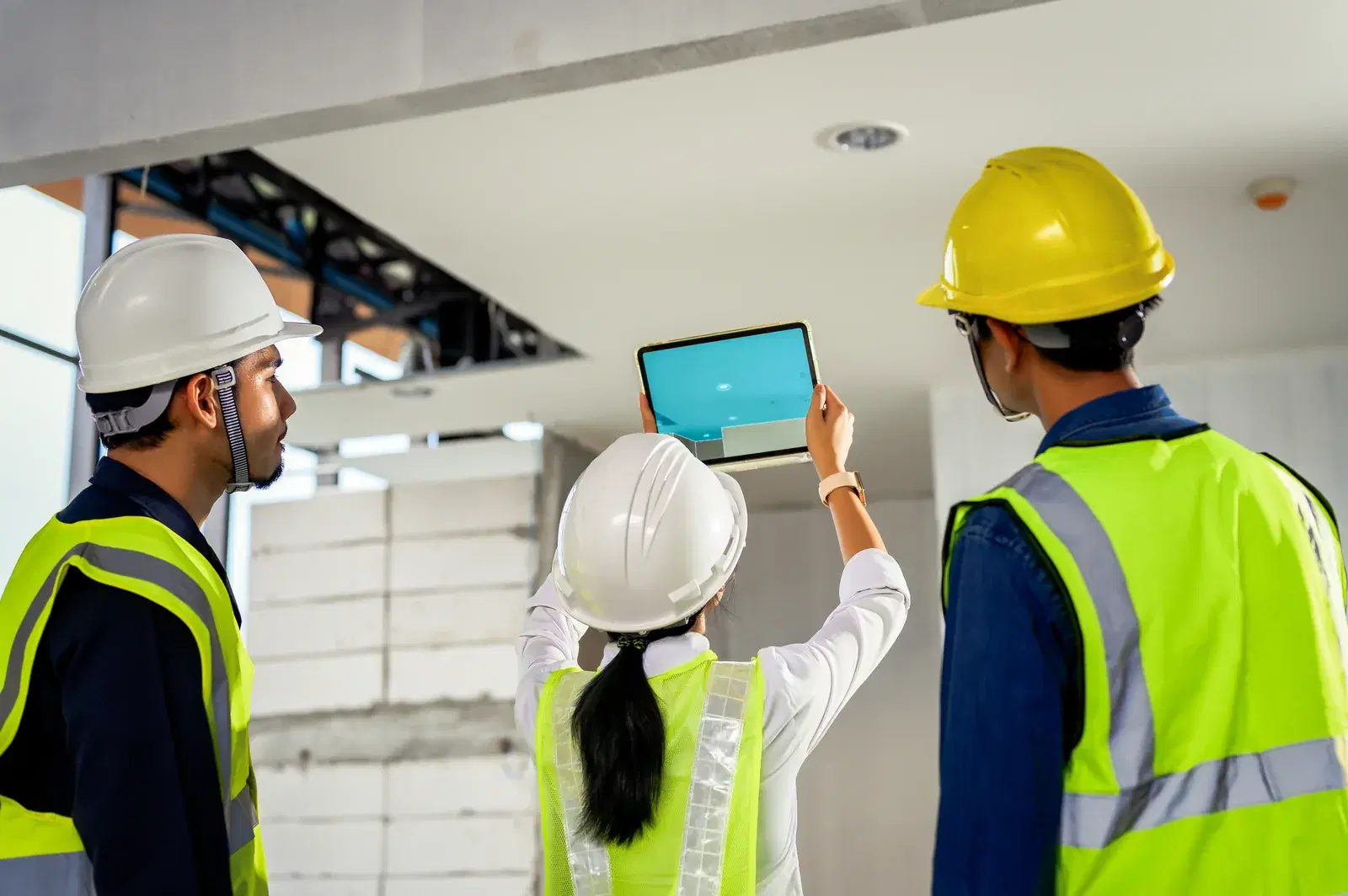
The first question we get from a new builder is almost always the same: what exactly does Kaël do on my site? It is a fair question. Construction has seen too many tools rebadged as "AI" that turn out to be a colour-graded PDF generator. So this post is the honest version — the pipeline, the inputs, the outputs, and the failure modes we still actively work on.
Kaël is built around one premise: a construction site is a stream of physical events, and the cost of catching a problem grows by an order of magnitude every week it stays uncaught. If you can move a risk discovery from week six to week one, you change the economics of the project.
The pipeline, in plain terms
Every Kaël deployment starts with a scan cadence — typically a full-floor LiDAR sweep every two weeks, supplemented by handheld scans of any zone under active work. The scans land in our ingestion layer, get registered against the design model, and are diffed against both the previous scan and the as-designed BIM.
That diff is the raw material. Out of it, Kaël derives three classes of artefact:
- Geometric deviations. Slabs that have drifted outside tolerance. Walls that are not where the drawing said they would be. Services routed through a column that has subtly moved.
- Progress evidence. What was structurally complete on a given date, what was finished, what was services-installed — all reconcilable against any contractor claim.
- Forward-looking risks. A façade panel order that is going to clash with a slab that drifted 35 mm. A lift shaft whose verticality budget is about to be exceeded on the next pour.
The third class is the one that matters. The first two exist in isolation on most projects. Kaël's job is to fuse them with the schedule and tell you, today, what is going to hurt next month.
What the project director actually sees
We have spent more time on the risk feed than on any other surface in the product. A project director does not want a 200-page report. They want a ranked list of "things you should care about this week", each with a geometric proof, a financial impact estimate, and a recommended owner.
The single most useful thing Kaël has done for us is take the floor-12 drift problem out of a meeting two months from now and put it in a message on my phone today. — VP, Construction, mid-cap developer
That is the artefact. Everything underneath — the LiDAR pipeline, the registration, the diff engine, the scheduling integration — exists to make that one message trustworthy.
Where it falls down today
Two places, honestly.
The first is in the messy middle of structural work — when temporary works, shoring, and partial pours create a scan that looks dramatically off from the design. Our diff engine handles it, but the false-positive rate climbs and we have to lean on the site team to confirm. We are working on this.
The second is non-geometric risk: a vendor about to delay, a permit about to lapse, a labour shortfall four weeks out. Kaël can reason about these when they show up in the scheduling integration — but the leading indicators are still mostly social, and that is a domain we are entering slowly and carefully.
Why we built it this way
The construction industry has been promised software it could not use for twenty years. Most of those promises failed because the system asked the site team to feed it data — to check boxes, mark up plans, log status. No site team has the time or the inclination.
Kaël starts from the opposite premise: scans capture reality whether the site team feeds the system or not. The intelligence layer sits on top of that physical record. The site team's only job is to act on the risk feed. That asymmetry is what makes the system survive contact with a real project.
If you are running a project and you would like to see what Kaël surfaces on your site, the fastest path is a single-floor pilot. We do those in under three weeks.
Written by
Rohan Shravan
Founder, Inkers

Construction is changing. Are you?
We work closely with every client to understand the specific project before anything else. Tell us what you’re building.